

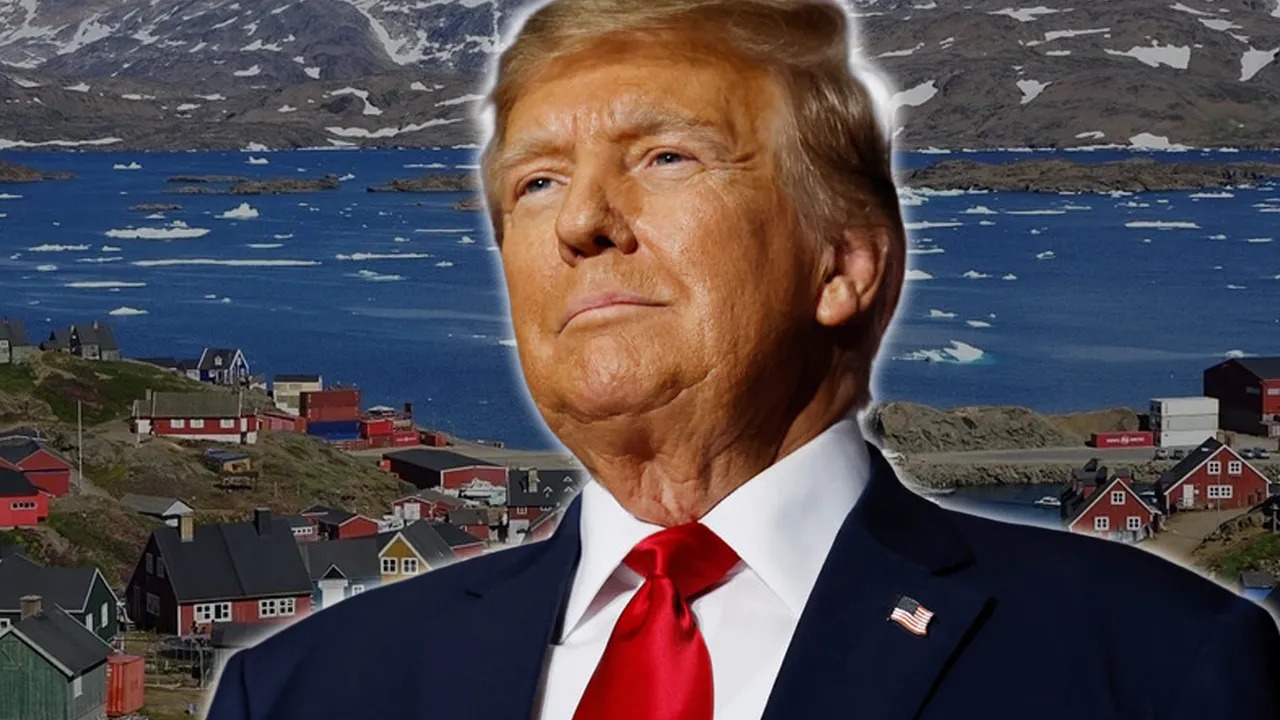
Upon his arrival to Davos, President Donald Trump was the scourge of European bureaucrats, the vast majority of whom were posturing aggressively over the Greenland standoff – with some even suggesting that military engagement would be imminent to stop President Trump’s desires to annex the Danish-occupied country.
By the time he left the infamous globalist conflab, President Trump had struck a deal and gotten exactly what he had been angling for all along.
President Trump announced his Greenland deal on Wednesday which reportedly includes America taking sovereign claims over different parts of Greenland with an increase in NATO security on the island designed to keep hostile adversaries from dominating the island’s natural resources.
In doing so, President Trump completed a Jeffersonian master stroke of historic proportions. Although founding father Thomas Jefferson wrote eloquently and presciently about the need for limited government, he realized as President that sometimes the heavy hand of the executive becomes necessary to ensure crucial economic and national security objectives.
As the nation’s chief executive, Jefferson was perhaps best known for the Louisiana Purchase, which vastly expanded American territory and enabled the Manifest Destiny that would come to define the national character. He did not acquire this land through happenstance or by dovish means. Jefferson used aggressive and perhaps even ruthless tactics to ensure America’s growth and potential, and we remain better off for it so many generations later.
Leveraging European Rivalries
Jefferson understood that French control of Louisiana posed a major strategic threat after Napoleon Bonaparte reobtained Louisiana from Spain in 1800. France’s imperial ambition under Napoleon was undeniable, and Jefferson wisely leveraged the rivalry between France and Britain in order to give himself better bargaining power.
Jefferson was wise not to confront France directly but created an indirect campaign of influence that let it be known how continued French control would push the United States toward a closer alliance with Britain. Jefferson disliked Britain and was repulsed at the idea of an alliance with them, but there was no reason for Napoleon to understand the magnitude of his disdain. This successful gambit brought the French to the table for serious talks.
Setting Strategic Private and Public Goals
Officially, Jefferson instructed U.S. envoys James Monroe and Robert Livingston to focus publicly on securing New Orleans and navigation rights on the Mississippi. The less aggressive public posture assuaged any possible fears from Britain or France. Behind closed doors, the tone was markedly different. The Jefferson administration was hoping to secure as much land as possible. This gave American negotiators room to maneuver without tipping their hand, building momentum that could be seized upon at an opportune time.
Exploiting French Desperation
By 1802–1803, France’s position in North America collapsed far faster than Napoleon had expected. What looked in 1800 like a revived French empire in the New World had, within two years, become a strategic burden.

Trump just keeps on thwarting the plans of the UN/CFR Globalists and the One World Government under the UIN