

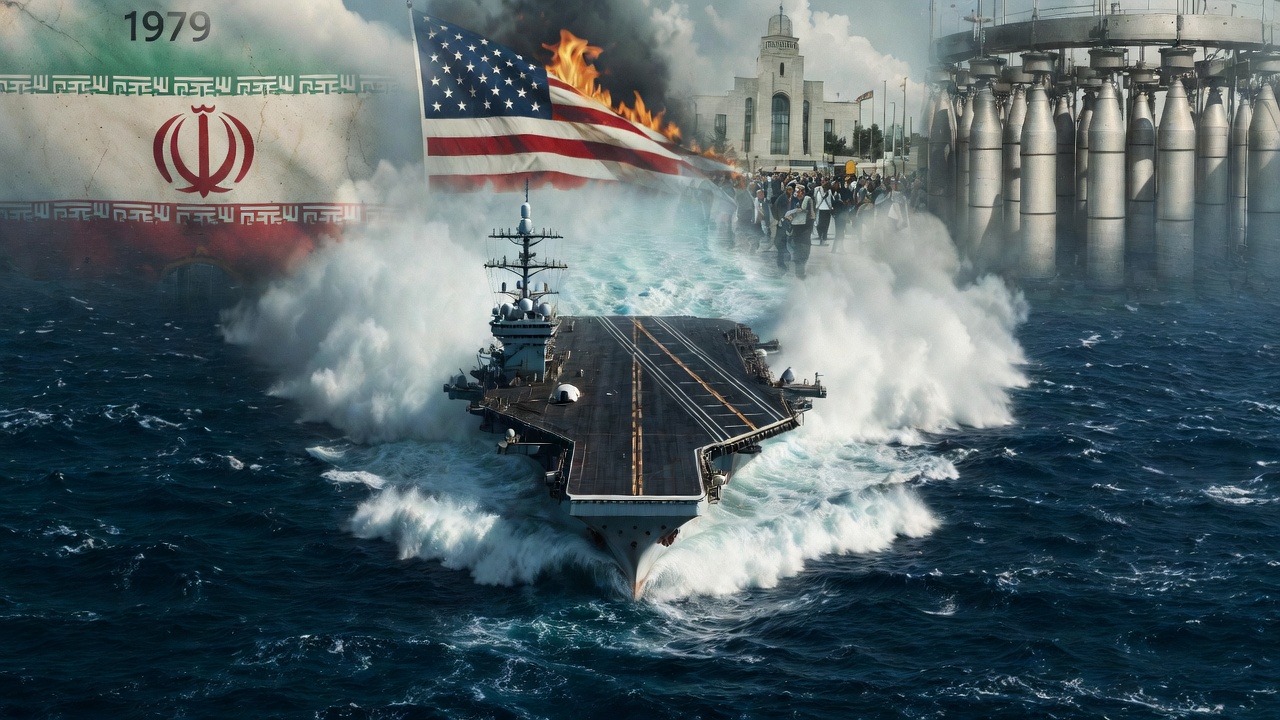
Yesterday, NBC reported, “Trump says if Iran doesn’t agree to nuclear deal, ‘we’ll find out’ whether U.S. attack would spark a regional war.” The sub-headline explained, “The escalating rhetoric from both leaders comes as the U.S. has sent a carrier strike group and air defense systems to the Middle East.” In short: We’re not messing around.
In a development that will surprise absolutely no one who’s been paying attention, Iran went from threatening “regional war” to negotiating a framework with the US in roughly 48 hours. It was the diplomatic equivalent of that scene in every action movie, where the henchman pulls a knife on the hero, the hero pulls out a gun, and the henchman slowly puts the knife away.
It is, after all, the Annus Operum, the Year of Action. January began with Army Rangers collecting Venezuelan President Nicolas Maduro from his palace and relocating him to more confining quarters in New York. In the following weeks, the U.S. repeated the same lead-up as to the Venezuelan action, except this time aimed at Iran (and without sinking cartel boats). A small navy of American warships and the supercarrier group USS Abraham Lincoln have quietly collected near Iran.
The Iranians have had a busy few weeks. During that period, Iran’s economy began to buckle, its currency imploded, protests erupted, and the regime slew over 3,000 protesters in a brutal crackdown, a fact that did not trouble Democrats, who were mono-focused on two police shootings in Minneapolis. Last week, the Iranians threatened to hold a massive naval exercise of their own in the critical Straits of Hormuz— a narrow channel through which one-fifth of the world’s oil travels. Over the weekend, two Iranian oil refineries mysteriously exploded, a development the regime stubbornly attributed to gas leaks.
Then this weekend, the Iranians suddenly and unexpectedly cancelled their planned naval exercise.
🚀 Publicly, the troublesome country’s Glorious Leader, 86, remained defiant. “The Americans should know if they start a war, this time it will be a regional war,” the Iranian supreme leader warned. When asked about Khamenei’s comment yesterday, Trump shrugged and told reporters, “of course he is going to say that.” He added that the U.S. has “the biggest, most powerful ships in the world over there.”
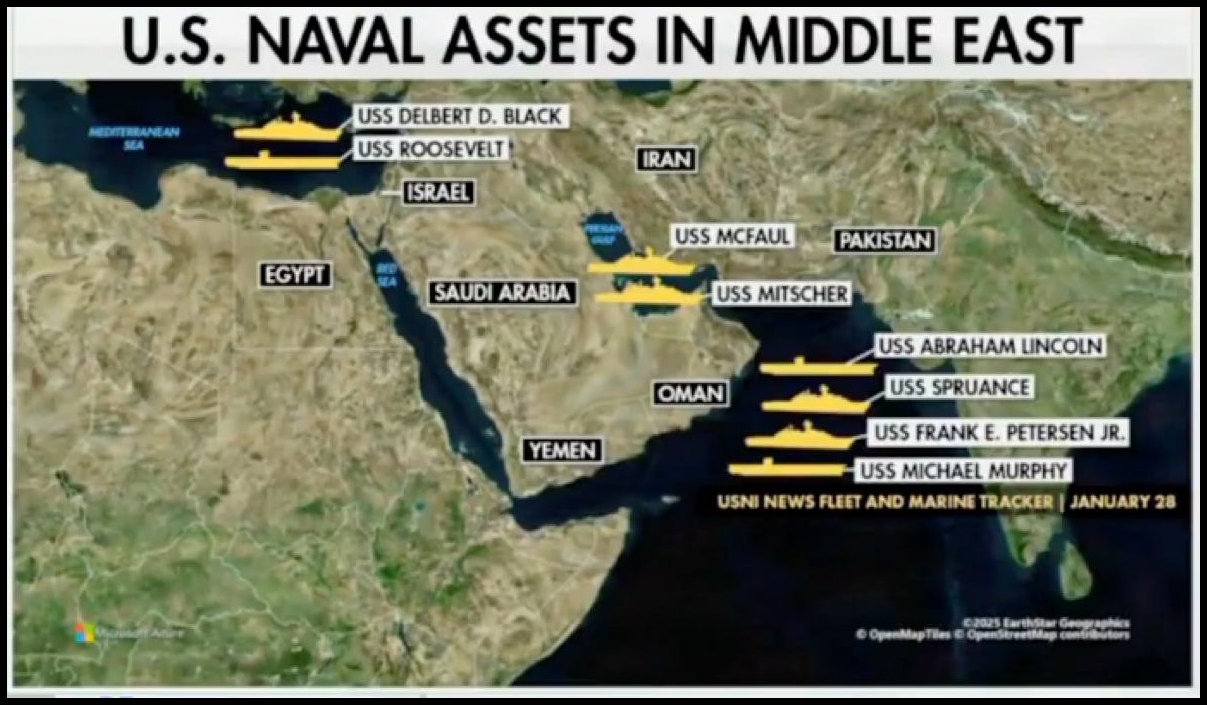
The Iranians blinked. This morning’s Jerusalem Post brought the happy report, “Iran says framework for negotiations with US to be finalized in coming days.” Just like magic. A coalition of Middle Eastern countries is now coordinating de-escalation talks, and Iran has agreed to participate. In other words, Iran ran back to the table after learning the hard way that you can’t bluff a carrier group.
Though buried in last week’s news noise, corporate media’s relentless drumbeat of gloomy news about Iran opined that Trump was starting World War III, getting the US into more forever wars, fretting over Trump’s “obsession with Iran” (he’d killed murderous Iranian General Soleimani during Trump 1.0), and generally predicting absolute disaster of the finest caliber. Like usual.
But this morning, it appears the Iranians will give in to Trump’s demands after all. Peace through strength.
President Trump has publicly said he wants Iran to stop enriching uranium and building underground nuclear sites. Until yesterday, Iran doggedly ruled it out. But their frozen position seems to be thawing. Yesterday afternoon, Iranian Foreign Minister Abbas Araghchi told CNN that, “I see the possibility of another talk if the U.S. negotiations team follows what President Trump said: to come to a fair and equitable deal to ensure there are no nuclear weapons.”
🚀 Despite media’s attempts to frame this as some kind of Trump-fueled Middle East adventurism, the US-Iran trouble didn’t start last week. It started all the way back in 1979, when President Jimmy Carter fumbled the Shah’s overthrow, and Iranian radicals seized the U.S. embassy— infamously holding 52 Americans hostage for 444 humiliating days, and helping clip Carter to one and only term.
Iran’s new theocratic regime was basically a more polished version of the Taliban with a better media team.
Ever since 1979, the Iranians have trained terrorists, called America “the Great Satan,” and given every signal of being busy little nuclear beavers. And every subsequent administration has tried something different to solve it, but they all failed. Reagan traded arms for hostages. Clinton tried quiet diplomacy. Bush called them the “Axis of Evil” but got bogged down in Iraq. Obama shipped them leaky pallets of cash and got a nuclear deal so bad the Iranians kept enriching uranium anyway.
Decades of alternating appeasement and saber-rattling produced nothing but a richer, bolder, more dangerous Tehran. Now, Trump is trying something new, something that every prior president was too chicken to attempt: ending the problem once and for all with credible military pressure combined with an open door to negotiate. Carrier groups don’t lie. And for the first time in forty-five years, the Ayatollah seems to have blinked first. Whether it holds remains to be seen, but at least someone is finally calling their bluff.
Iran might not care about tariffs, but they saw what happened in Venezuela. President Trump isn’t fooling around. He didn’t start this problem, but he aims to end it.

As the same with Teddy Roosevelt TALK SOFTLY AND CARRY A BIG STICK